

Why Does Your Car Struggle to Start After Sitting Overnight in Dubai?
Cars that don’t start in the morning can be due to a weak battery, electrical drain, or ignition system faults after overnight parking. This issue is common in Dubai because high temperatures shorten battery life and degrade electrical components. Cars parked for 8 to 12 hours often lose starting power.
Morning starting problems involve key systems like the battery, starter motor, and fuel system. Faults in parts such as batteries, alternators, and spark plugs reduce engine start efficiency. Early diagnosis helps avoid breakdowns and keeps the car reliable.
Car Not Starting in the Morning in Dubai: 9 Real Causes Explained
There are 9 primary causes of a car not starting in the morning, including battery failure, electrical drain, starter faults, alternator issues, fuel problems, spark plug wear, sensor faults, oil resistance, and immobilizer errors.
These issues develop after 8 to 12 hours of inactivity and become more frequent in UAE due to temperatures above 40°C and extended parking durations.
1. Battery Failure Reduces Morning Starting Power
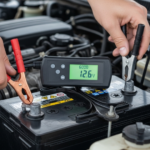
Battery failure lowers the voltage below the required 12.4V, reducing engine cranking ability. A healthy battery maintains 12.6V to 12.8V, while a weak battery drops below 12.4V, limiting startup power.
High temperature exposure accelerates battery degradation. Studies show that batteries in hot climates lose 30% to 50% of their efficiency faster than in moderate regions.
Measurable battery failure indicators:
- Produces a repeated clicking sound
- Dims dashboard lights significantly
- Slows engine crank speed
- Requires jump start frequently
Most car batteries last 18 to 24 months, compared to 36 months globally.
2. Parasitic Drain Discharges Battery Overnight
Parasitic drain continuously consumes battery power when the vehicle is off, reducing available voltage by morning. Normal electrical systems draw 20 to 50 milliamps, while faulty systems exceed 100 milliamps, leading to overnight discharge. Even a 0.1 amp drain can discharge a battery by 50% within 24 hours.
Common parasitic drain sources:
- Interior lights left active
- Faulty ECU modules
- Aftermarket accessories like trackers and cameras
- Damaged wiring circuits
This condition directly causes a car to struggle to start after sitting overnight.
3. Starter Motor Failure Blocks Engine Cranking
Starter motor failure prevents the engine from rotating during ignition. The starter motor requires a high current of 150-300 A to crank the engine. Wear and internal damage reduce its performance over time.
Starter motor failure symptoms:
- Produces a single clicking noise
- Fails randomly during ignition
- Shows no response to the key turn
Starter motors typically function efficiently up to 100,000 to 150,000 km before the risk increases.
4. Alternator Failure Stops Battery Charging
Alternator failure prevents battery recharging, causing power loss after parking. A working alternator produces 13.5-14.5V while the engine runs. A faulty alternator produces less than 13V, leading to incomplete charging.
Alternator failure indicators:
- Battery warning light appears
- Battery drains repeatedly
- Headlights flicker or dim
- Electrical systems behave inconsistently
Vehicles with alternator issues often fail to start after overnight parking.
5. Fuel System Problems Reduce Ignition Efficiency
Fuel system faults reduce fuel pressure, which disrupts combustion during startup.
Engines require stable fuel pressure between 35 and 65 PSI for proper ignition. Pressure loss occurs after long idle periods.
Fuel system issues:
- A weak fuel pump reduces flow
- Clogged injectors block fuel delivery
- Fuel pressure regulator failure
- Leaking fuel lines
Fuel pressure below 30 PSI significantly reduces starting efficiency.
6. Spark Plug Wear Reduces Combustion Power
Worn spark plugs weaken the ignition spark, leading to incomplete combustion. Spark plugs generate high voltage between 20,000 and 40,000 volts to ignite the air-fuel mixture.
Spark plug failure signs:
- The engine cranks without starting
- Rough idle after ignition
- Increased fuel consumption
- The engine misfires while driving
Spark plugs require replacement after 30,000 to 50,000 km, depending on the type (copper, platinum, or iridium).
7. Sensor Faults Disrupt Engine Timing
Sensor faults send incorrect data to the engine control unit, which disrupts fuel-air balance and ignition timing. The ECU relies on real-time sensor data for engine operation. Incorrect signals affect startup performance.
4 critical sensors involved:
- Coolant temperature sensor
- Crankshaft position sensor
- Mass airflow sensor
- Throttle position sensor
Sensor failure reduces ignition efficiency and delays engine start.
8. Engine Oil Resistance Slows Engine Movement
High-viscosity or degraded engine oil increases internal resistance, slowing engine rotation during startup. Oil thickens after long parking periods, especially when the quality decreases.
3 oil-related issues:
- Incorrect viscosity grade
- Old or contaminated oil
- Delayed lubrication flow
Using recommended oil grades, such as 5W-30 or 10W-40, improves cold-start performance and reduces engine strain.
9. Immobilizer System Errors Block Ignition
Immobilizer system errors prevent engine start due to authentication failure between the key and the ECU. Modern vehicles use electronic security chips for ignition control.
3 immobilizer-related issues:
- Key chip malfunction
- ECU communication failure
- Security system faults
Immobilizer issues completely block ignition, even when the battery and fuel systems function correctly.
How Dubai’s Climate Increases Morning Starting Problems?
Dubai’s climate increases morning car-starting problems by weakening the battery, slowing electrical flow, and reducing engine efficiency after overnight parking. High daytime heat and cooler night temperatures create stress on the battery and engine system. This leads to slow or failed ignition in the morning.
- High Heat: Temperatures above 40°C reduce car battery life by up to 50%. This also lowers charging power after each drive cycle.
- Night Temperature Drop: A drop of 8°C to 15°C reduces battery voltage by 0.2V to 0.4V, weakening morning starting power.
- Battery Lifespan: Car batteries last about 18 to 24 months. In cooler countries, they last up to 36 months.
- Long Parking Hours: Parking for 10 to 12 hours can reduce battery charge by up to 30%. This effect is stronger in older batteries.
- Humidity Level: Humidity above 60% increases resistance in wires and terminals. It slows electrical flow during ignition.
- Engine Heat: Engine compartments remain above 35°C for 2 to 4 hours after shutdown, which can affect battery stability.
- Dust Particles: Fine dust smaller than 75 microns can enter connectors and reduce proper electrical contact over time.
Warning Signs of a Car Not Starting in the Morning
Warning signs that a car won’t start appear when the battery or starter system loses power during long parking periods. Early attention helps prevent full starting failure.
- The engine cranks slowly when the battery voltage drops below 12.4V.
- A clicking sound occurs when the battery cannot deliver enough starting current of 150 to 300 amps.
- Dashboard lights look dim when the battery charge drops by 30% or more overnight.
- The engine does not respond when the starter motor fails to receive proper current.
- The car takes 3 to 5 seconds or more to start due to weak ignition power.
- A frequent jump start is needed when the battery cannot hold a charge properly.
Car Maintenance Tips for Consistent Engine Start in Dubai
Most starting failures are due to a weak battery and poor maintenance over time. Regular checks and proper usage increase starting reliability and reduce breakdown risk.
- Replace the car battery every 18 to 24 months to maintain a stable voltage above 12.6V.
- Check battery terminals every 3 months to prevent corrosion and power loss.
- Drive the car at least 2 to 3 times per week to keep the battery charge above 70%
- Use engine oil like 5W-30 or 10W-40 to reduce resistance during morning start.
- Inspect alternator output every 6 months to ensure a charging range of 13.5V to 14.5V
- Turn off lights and accessories to avoid battery drain above 50 milliamps.
- Clean electrical connections every 6 months to maintain proper current flow.
- Park the car in shaded areas to reduce heat exposure above 40°C.
How to Identify the Exact Problem Quickly?
Identify the exact starting problem by observing engine sound, response time, and electrical behavior during ignition. Each symptom links directly to a specific fault in the battery, starter, fuel system, or electrical circuit. Quick identification reduces diagnosis time and prevents further damage.
| Symptom | Likely Cause | Measurable Value |
| Clicking sound | Weak battery | Voltage below 12.4V |
| Rapid clicking | Fully discharged battery | Voltage below 12.0V |
| Slow crank | Low battery voltage or thick oil | Cranking speed below normal RPM |
| Crank but no start | Fuel or ignition issue | Fuel pressure below 35 PSI |
| No response | Starter motor or electrical failure | No current flow to starter |
| Dim lights while starting | Battery charge loss | Charge drop above 30% |
| Engine starts then dies | Fuel delivery issue | Unstable fuel pressure |
| Burning smell | Electrical short or wiring fault | Heat above normal levels |
| Dashboard warning lights | Sensor or ECU fault | Error codes stored in ECU |
| Needs jump start daily | Battery capacity failure | Charge retention below 50% |
This structured approach helps identify the exact issue by using clear, measurable symptoms.
Why Is Professional Car Diagnosis Necessary for Starting Issues?
Professional diagnosis identifies the exact fault using accurate tools and measured data. Basic checks reveal surface issues, while hidden faults exist in systems such as the battery, alternator, and wiring. Diagnostic tools measure voltage, current flow, and fault codes within minutes.
Any starting issue requires accurate inspection and expert handling for reliable results. Battery Zone UAE provides professional solutions, including car battery replacement in Dubai. The service ensures correct battery voltage above 12.6V and proper system performance for consistent engine start.
Conclusion
Morning car-starting problems can result from a weak battery, electrical faults, or fuel system issues after overnight parking. Early detection of warning signs and regular maintenance improve starting reliability and reduce breakdown risk. Professional diagnosis ensures accurate fault detection and long-term vehicle performance.