

Waste collection points play an important role in keeping industrial facilities clean, safe, and productive. When bins are placed too far from production lines, workers may leave waste near machines or spend extra time carrying it across the factory. Poor placement can also block walkways, create safety risks, and slow down daily operations.
Industrial facilities should plan waste collection points based on production flow, waste types, worker movement, and collection frequency. A well-planned system makes waste easier to sort and remove without interrupting manufacturing work.
Key Factors for Planning Industrial Waste Collection Points
1. Study Waste Generation Across Production Lines
Before placing bins, facility managers should understand where waste is produced and how much each area generates. Different production lines can create different types and amounts of waste.
One area may produce cardboard and plastic packaging, while another may generate metal scraps, damaged parts, or general waste. Walk through the facility during normal operating hours and observe how workers handle waste.
Record the busiest production areas, the types of materials discarded, and how quickly bins fill up. This information helps managers choose suitable collection points instead of placing bins wherever space is available.
2. Place Collection Points Close to Waste Sources
Workers should be able to dispose of waste without walking long distances or leaving their workstations for extended periods. Placing the right bins near packaging stations, assembly areas, cutting machines, and material preparation zones can make waste disposal easier.
However, bins should not sit directly in areas where they could interfere with machine operation or material movement. Keep them within convenient reach while maintaining enough clearance for workers, equipment, and emergency access.
Facilities should test proposed locations with the people who use each production line. Their feedback can help identify practical problems before the layout becomes permanent.
3. Separate Different Types of Industrial Waste
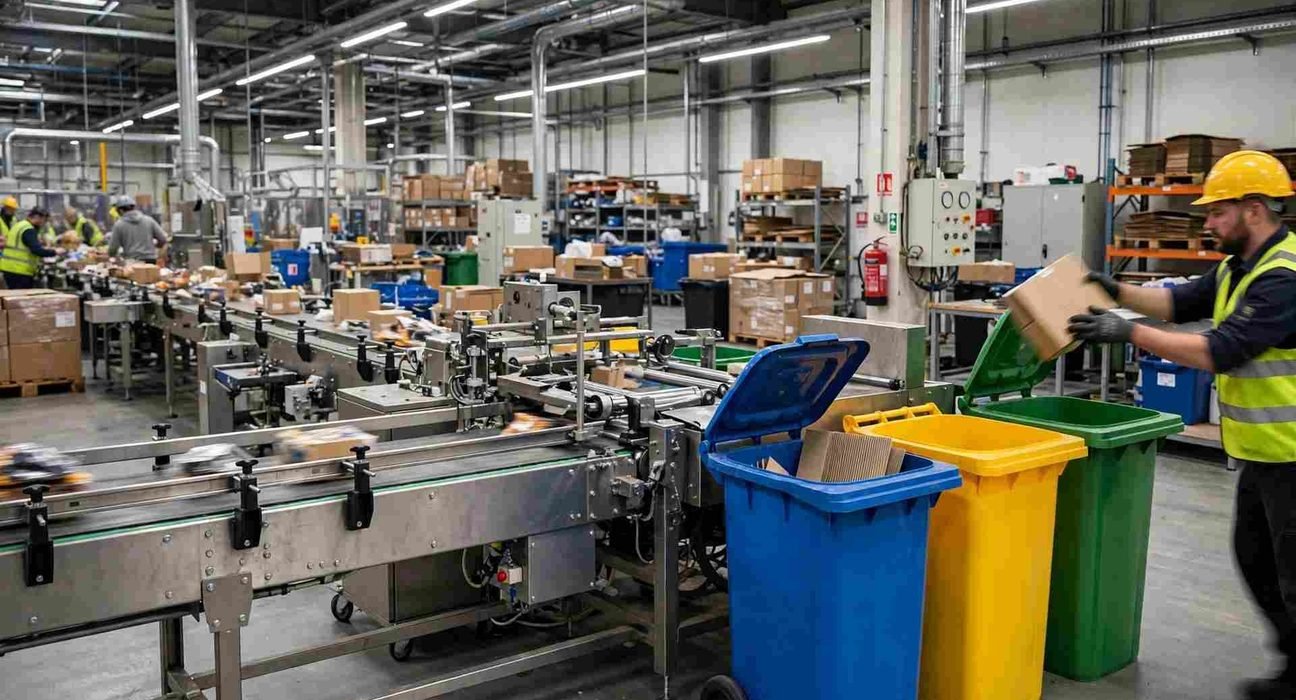
A single collection point for every waste type can make sorting difficult and increase the risk of contamination. Industrial facilities should create separate collection points for materials such as cardboard, plastic, metal, general waste, and recyclable packaging where these streams are generated.
Hazardous waste, chemical containers, oily materials, and other regulated waste need separate handling arrangements based on applicable safety and environmental requirements. These materials should never be mixed with ordinary waste.
Clear labels, consistent bin colours where appropriate, and simple signs can help workers identify the correct container. Facilities should use a system that is easy to follow during busy shifts rather than relying on complicated instructions.
4. Keep Walkways and Equipment Routes Clear
Waste bins can become obstacles when they are placed in narrow aisles or near frequently used routes. This is especially important in facilities where forklifts, pallet trucks, and workers share the same general area.
Collection points should be positioned outside marked pedestrian routes, forklift travel paths, emergency exits, fire equipment access areas, and machine operating zones. Managers should check that bins do not obstruct loading bays or areas where materials are transferred between production stages.
Floor markings can help define collection areas and keep them separate from movement routes. Regular inspections are necessary because bins may gradually move away from their assigned positions during busy shifts.
5. Choose Bin Sizes Based on Waste Volume
The right bin size depends on how much waste a production area generates and how often staff can collect it. Small bins may fill quickly, leading to overflowing waste and frequent interruptions. Oversized bins can take up valuable floor space and make movement around a production line more difficult.
Estimate the waste volume produced during a typical shift and consider any changes between busy and quiet periods. High-volume areas may need larger containers or several collection points, while smaller workstations may only need compact bins.
For facilities reviewing equipment options, Crateco Pack LLC, a waste bin manufacturer in the UAE, can be considered when comparing bin capacity, material, durability, and suitability for industrial settings. The final choice should match the facility’s waste types, collection needs, and handling requirements.
6. Plan Collection Frequency Around Production Schedules
A collection point only works well when waste is removed at the right time. If bins remain full for too long, workers may place waste on the floor or use containers intended for other materials. Collecting waste too often, however, can create unnecessary traffic and interrupt production.
Managers should set collection schedules based on waste volume, bin capacity, hygiene needs, and operational risk. High-output production lines may require several collections per shift, while low-volume areas may need less frequent service.
Where possible, schedule waste movements during planned breaks, shift changes, or lower-activity periods. This helps collection teams work efficiently without competing with material deliveries or active production tasks.
7. Make Waste Collection Safe and Easy for Workers
Collection points should be designed around the way workers handle waste. Bins must be stable, accessible, and suitable for the materials placed inside them. Heavy waste should not require workers to lift loads beyond safe limits, and sharp scraps should go into containers designed to prevent cuts or punctures.
Facilities should provide enough space for workers to dispose of materials without reaching across moving equipment or bending into unsuitable positions. Lids, wheels, handles, and loading openings should suit the intended task.
Staff training is equally important. Workers should know which bin to use, how to handle unusual waste, and whom to contact when a container is damaged, full, or unsuitable for a particular material.
8. Consider Cleaning, Odours, and Spill Prevention
Waste collection points need regular cleaning and maintenance, particularly in food processing, chemical handling, and other environments where contamination can create additional risks. Leaking containers, loose scraps, and spilled liquids can make floors slippery and attract pests.
Choose bins that are suitable for the type of waste they will hold. Containers used for wet or messy materials may need to be leak-resistant and easy to clean. Waste containing oil, chemicals, or other hazardous substances requires appropriate containers and handling procedures.
Assign responsibility for inspecting each collection point. A simple checklist can cover bin condition, cleanliness, spills, labels, and signs of overflow. Any damaged container should be removed from service when it can no longer be used safely.
Conclusion
Industrial facilities should plan waste collection points around the actual flow of production, not simply the available floor space. The most effective layout places suitable bins near waste sources, separates different materials, keeps traffic routes clear, and allows waste to be removed safely and regularly.
Managers should consider waste volume, worker movement, bin capacity, cleaning needs, and collection schedules before choosing locations. Regular inspections and feedback from staff will help keep the system effective as operations change. With a practical plan, facilities can reduce clutter, improve housekeeping, and support smoother production without unnecessary interruptions.