


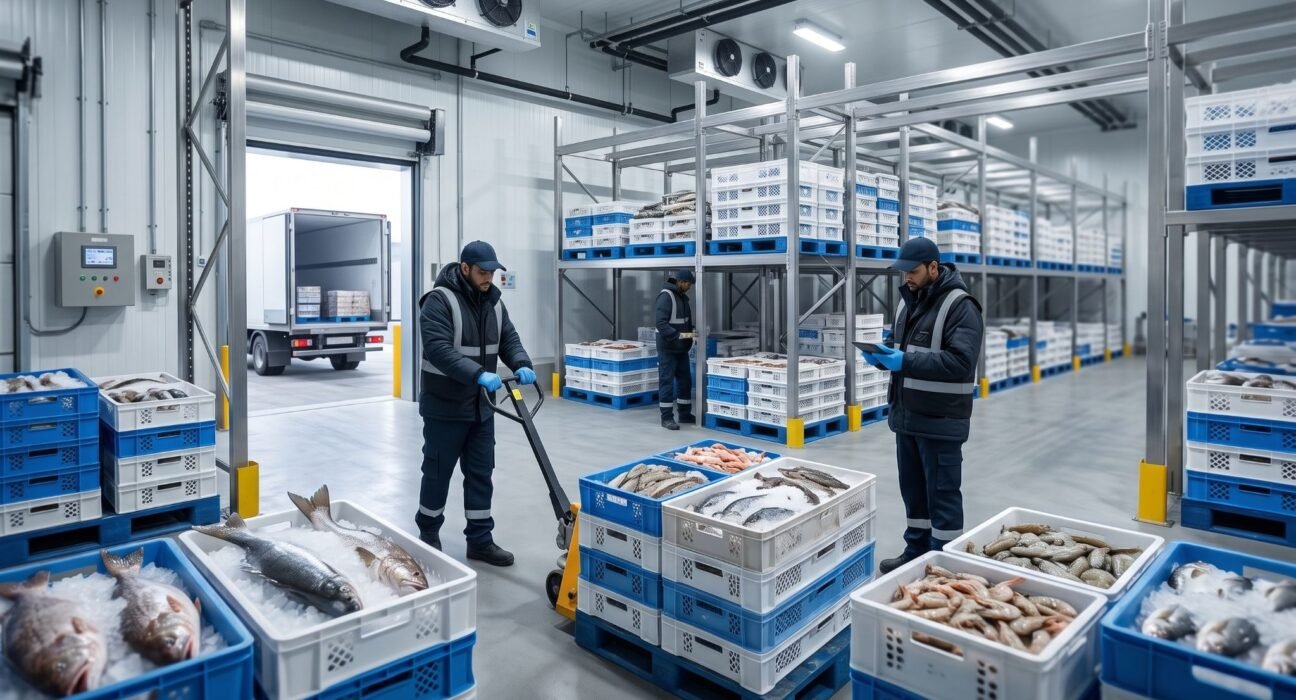
Seafood is one of the most delicate food products to handle. It can lose its freshness very quickly if it is not stored under the right conditions. Businesses that distribute seafood across the UAE need reliable storage methods to keep products safe from the warehouse to the customer.
Following the best storage practices for UAE seafood distribution businesses helps protect product quality, reduce spoilage, and meet food safety standards throughout the supply chain.
The most important practices include maintaining the right temperature, protecting the cold chain, and using clean food-grade containers. Businesses should also prevent cross-contamination, rotate stock correctly, and keep storage areas clean at all times.
Regular employee training, product quality checks, and suitable transport complete a reliable seafood storage and distribution process.
Why Does Proper Seafood Storage Matter?
Proper seafood storage is essential for every distributor in the UAE. High temperatures, long transport routes, and strict food safety requirements make careful handling a daily priority.
Following the best storage practices helps businesses keep seafood fresh, reduce waste, and deliver high-quality products to customers.
It also supports food safety compliance, improves customer confidence, and lowers the chances of financial losses caused by spoiled products.
Useful Storage Practices for UAE Seafood Distribution Business
1. Keep Seafood at the Right Temperature
Temperature control is the first step in protecting seafood quality. Fresh seafood should stay chilled at all times, while frozen products must remain frozen until they are ready for use. Even a short rise in temperature can reduce freshness and increase the risk of bacterial growth.
Businesses should use reliable cooling systems and check storage temperatures several times each day to make sure products stay within the recommended range.
2. Protect the Cold Chain During Transport
The cold chain begins when seafood is received and continues until it reaches the customer. Every stage of loading, storage, transportation, and delivery should maintain the required temperature.
Delays during loading or unloading can expose seafood to heat and reduce its shelf life. Using refrigerated vehicles and planning delivery routes carefully helps maintain product quality throughout the journey.
3. Use Food-Grade Storage Containers
The quality of storage containers has a direct effect on seafood safety. Food-grade containers are easy to clean, resist moisture, and do not react with food products.
Many seafood distributors choose durable plastic crates from Crateco Pack LLC because they provide strong support, allow proper airflow, and perform well in cold storage environments.
Using reliable storage equipment also reduces product damage during handling and transportation.
4. Prevent Cross-Contamination
Seafood should never be stored together with products that may carry harmful bacteria or strong odors. Different seafood types should also be separated when necessary to maintain quality.
Workers should always use clean gloves, sanitized tools, and dedicated work areas while handling products. Regular cleaning of storage rooms, equipment, and work surfaces helps reduce contamination risks and supports better food safety practices.
5. Rotate Stock Using FIFO
Inventory should always follow the First In, First Out, or FIFO, method. This means products that arrive first should be distributed first. Proper stock rotation reduces waste and helps businesses avoid selling older products after newer deliveries arrive.
Every batch should have clear labels showing the receiving date and storage details. Organized shelves also make inventory management faster and more accurate.
6. Keep Storage Areas Clean
Clean storage facilities play an important role in maintaining seafood quality. Floors, walls, shelves, and drainage systems should be cleaned on a regular schedule to prevent bacteria and unpleasant odors.
Waste should be removed quickly, and cleaning records should be maintained for inspections. A clean storage environment protects products while creating a safer workplace for employees handling seafood every day.
7. Monitor Humidity Levels
Humidity affects both seafood quality and storage conditions. Too much moisture can encourage bacteria and mold, while very low humidity may cause some products to dry out.
Cold storage facilities should maintain balanced humidity levels based on the type of seafood being stored. Regular inspections help identify condensation, leaks, or ventilation problems before they affect stored products.
8. Inspect Seafood Regularly
Routine inspections help identify problems before products are delivered to customers. Employees should check seafood for changes in smell, color, texture, and packaging condition.
Any damaged or questionable products should be removed immediately to protect the remaining stock.
Regular inspections also allow businesses to maintain quality standards and quickly respond to storage issues before they become larger problems.
9. Train Employees on Safe Handling
Employees are responsible for following storage procedures every day. Regular training helps staff understand food safety rules, temperature requirements, hygiene practices, and correct handling techniques.
Workers should also know how to record storage temperatures and report equipment problems immediately. A well-trained team makes fewer mistakes, protects product quality, and improves the overall efficiency of seafood distribution operations.
10. Maintain Storage Equipment
Cold rooms, refrigerators, freezers, and monitoring systems should be inspected and serviced regularly. Poorly maintained equipment may fail without warning, causing seafood to spoil within a short time.
Preventive maintenance helps businesses avoid expensive product losses and unexpected repairs. Temperature sensors should also be calibrated to ensure accurate readings throughout the storage process.
11. Plan Deliveries Efficiently
Delivery planning is an important part of seafood storage because products remain sensitive until they reach the customer. Routes should be planned to reduce travel time and avoid unnecessary stops.
Refrigerated vehicles should be inspected before every trip to ensure cooling systems work properly. Fast and well-organized deliveries help maintain seafood freshness while improving customer satisfaction.
Common Storage Mistakes to Avoid
Many seafood losses happen because of simple mistakes that can be prevented with better storage practices. Businesses should review their daily operations regularly and correct problems before they affect product quality.
Common mistakes include:
- Leaving seafood outside cold storage for too long.
- Skipping regular temperature checks.
- Using damaged or non-food-grade containers.
- Mixing different seafood products without proper separation.
- Ignoring cleaning schedules.
- Failing to rotate inventory using FIFO.
- Delaying equipment maintenance.
- Allowing poor handling practices during loading and unloading.
- Providing little staff training on food safety.
Avoiding these mistakes helps businesses reduce waste, improve product quality, and maintain customer trust.
Conclusion
Every stage of seafood distribution affects the quality of the final product. Good storage is not only about keeping seafood cold. It also requires clean handling, organized inventory, reliable equipment, and well-trained employees working together every day.
Following the best storage practices for UAE seafood distribution businesses allows companies to reduce waste, protect product freshness, meet food safety requirements, and build stronger relationships with customers.
Businesses that focus on these everyday practices are better prepared to deliver safe, high-quality seafood across the UAE.